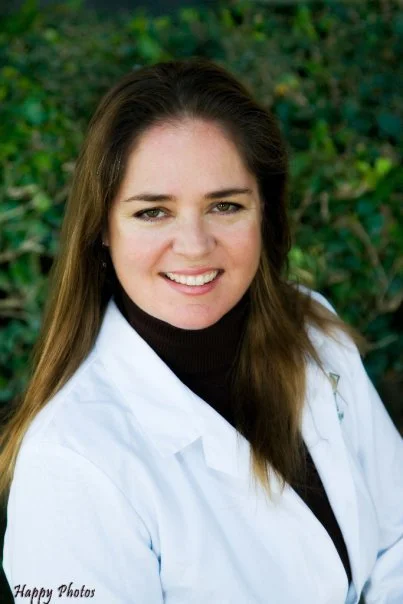
Dr. Tiffany Atkinson, DACM, LAc
Doctor of Acupuncture and Chinese Medicine (WA & CA) | Educator | Clinical Researcher
Dr. Tiffany Atkinson brings over 30 years of holistic healthcare experience to her patients in Edmonds, Washington, and Southern California. Her practice blends decades of clinical hands-on experience with cutting-edge academic research.
Clinical Practice & Philosophy
Tiffany began her journey in 1990 with a background in massage therapy before earning her Master of Science degree in acupuncture and herbal medicine. Continually dedicated to the highest standards of her profession, she went on to earn her Doctorate from Bastyr University in 2021.
In 2007, she shifted her focus to Japanese-style acupuncture, studying extensively under Kiiko Matsumoto. This palpation-based method shifts the focus entirely to the patient's immediate physical feedback. By gently palpating diagnostic areas at every visit, Tiffany crafts a highly customized treatment plan in real-time. It is the perfect marriage of classical acupuncture knowledge and an individualized, responsive approach.
Research & Academics
Dedicated to advancing the field of acupuncture, Tiffany bridges the gap between traditional medicine and modern science:
Adjunct Professor at Bastyr University.
Principal Investigator at the Bastyr University Research Institute (BURI), currently in her 4th year appointment, evaluating electroacupuncture safety for retinal eye diseases.
Japanese Acupuncture: The Art of Precision & Patient-Centric Care
Japanese acupuncture is a refined, gentle tradition with a deep history dating back to 562 C.E., when the monk Chiso first brought medical texts from China to Japan. By 701 C.E., Japan established its first medical laws (Ishitsu-rei), including acupuncture, this structure is used today in medical schools.
Between 1603 and 1867, a brilliant, blind acupuncturist named Waichi Sugiyama revolutionized the field by inventing the guide tube (shinkan). This invention allowed for the use of incredibly thin needles and a painless insertion technique that over 90% of Japanese practitioners still use today. Beginning in the Meiji era (1868), the profession specialized further, being taught primarily in schools for the blind. This unique history placed a profound emphasis on highly developed tactile skills, birthing the tradition of palpation-based (touch-based) diagnosis and abdominal palpation (Hara diagnosis).
The Japanese vs. Chinese Approach
While both roots are deeply historic, Japanese acupuncture offers distinct structural differences from the Chinese style:
Incredibly Thin Needles: Needles are inserted very superficially, or sometimes simply held against the skin without piercing it at all.
Painless Experience: The treatment purposely avoids the heavy, aching, or throbbing sensation (de qi) common in Chinese acupuncture.
Innovative Tools: It heavily features the guide tube and the frequent integration of moxibustion—burning the refined mugwort herb (Ai ye) in tiny, rice-grain-sized cones called Tounekyu (or oku).
In My Practice: A Dialogue with Your Body
In my clinic, I practice a palpation-based method. I believe this is the most patient-centric approach to medicine because it allows your body to guide the treatment. Instead of relying solely on intellectual theory, I listen to live feedback from your physical structure.
By palpating active reflex points before and during your session, we can immediately confirm that pain, tension, and tenderness are clearing in real time. This instant feedback ensures that we are achieving the exact therapeutic results your body needs.
To continuously deepen this craft, I continue to study closely with my Sensei, Kiiko Matsumoto. Together, we work on expanding the ancient classical formulations to effectively treat and resolve today’s complex modern illnesses. Japanese acupuncture is not just a set of points—it is a way of looking at the living body, applying classic wisdom, and using direct touch to confirm healing.