"Yin and Yang are the law of heaven and earth, the outline of all things, the parents of change, the root and beginning of life and death, and the storehouse of spirit-brightness." (Su Wen, Chapter 5)
Acupuncture
What impresses me most is all the research and findings about acupuncture in recent years and currently being studied in many different medical and physical needs, many different settings, to how and why acupuncture works. Even more fascinating is the ability to see into the brain and neural pathways to understand acupuncture, for us neural nerds. To see some of the beginnings of the how and why acupuncture works. How did such brilliance evolve without modern science? I am in awe and wonderment of those who studied the human body before.
Early scholars and practitioners began recording through both studies independent and from within the practice of acupuncture and east Asian medicine. Through duplication and exploration came some of the theories and practices that continue today, and into the future. Below are some of the works that have been so important at shaping acupuncture and the practice as we know it today.
During the 4th to 2nd century B.C.E., the beginnings of our classics, The Han Dynasty Foundations:
Huangdi Neijing Suwen (The Yellow Emperor's Inner Classic: Basic Questions)
Establishes the core philosophy of Yin/Yang, Qi, and preventative medicine.
Huangdi Neijing Lingshu (The Yellow Emperor's Inner Classic: Spiritual Pivot)
Serves as the world's oldest comprehensive technical manual on acupuncture and meridian pathways.
Nan Jing (The Classic of Difficult Issues)
Standardizes radial wrist pulse diagnosis and codifies the Five Elements "Mother-Son" rules.
Shennong Bencao Jing (The Divine Husbandman's Materia Medica)
The ancestral textbook of East Asian pharmacology, categorizing 365 natural substances into three tiers.
Shanghan Zabing Lun (Treatise on Cold Damage Diseases)
Written by Zhang Zhongjing; creates the definitive diagnostic framework for tracking infectious febrile illnesses.
These are considered the building blocks of acupuncture and east Asian medicine. My personal favorite, Dr. Hua Tuo, 140-208 C.E., a physician and surgeon the father of surgery, including dissolving stitches (made from sheep's stomach lining), anesthesia (Mafeisan), and medical physical fitness. He is the pioneer of the Hua Tuo Jia Ji acupuncture points, Located exactly 0.5 inches out to either side of the human spine, these 34 distinct points (17 on each side running from the neck down to the lower back). Perhaps even observing the autonomic nervous system? At the end of the Han Dynasty, 2nd century B.C.E.-220 C.E., the hair-like stainless steel needle was perfected, with different shapes and sizes, that our needles today are fashioned like.
During the years 266 CE – 1368 CE, the studying continues with:
Zhen Jiu Jia Yi Jing (The Systematic Classic of Acupuncture and Moxibustion)
Compiled by Huangfu Mi in 282 CE; the very first textbook to standardize 349 acupoints.
Zhubing Yuanhou Lun (Treatise on the Pathogenesis and Manifestations of All Diseases)
Published in 610 CE; the first comprehensive Chinese medical text on pathology and etiology.
Beiji Qianjin Yaofang (Essential Formulas for Emergencies Worth a Thousand Pieces of Gold)
Written by Sun Simiao, 652 CE; expands ethics, pharmacology, and integrates gynecology and pediatrics.
Tongren Shuxue Zhenjiu Tu Jing (Illustrated Manual of Acupuncture Points on the Bronze Figure)
Commissioned by the Song Emperor in 1026 CE to unify point locations alongside life-sized bronze drilling statues, to practice needling as students of acupuncture.
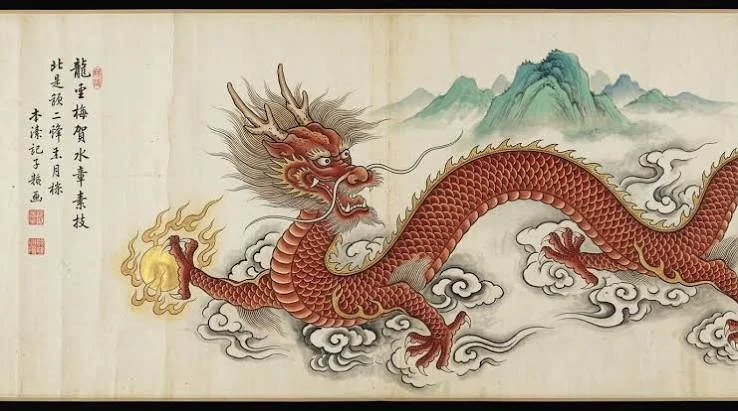
Then came the Golden Age Ming Dynasty, 1368-1644 C.E. and Qing Dynasty,1644–1712 CE
Zhong Xi Hui Tong
("Convergence of Chinese and Western Medicine" or "Medical Syncretism,")
Qing
Began the active synthesis of Chinese and Western bio-sciences.
Birthed the dual-diagnostic approach used in modern Asian hospitals.
Primary Advancement
Breakthrough Text
Era
Modern Clinical Value
Cataloged 1,892 natural substances with strict scientific classification.
Bencao Gangmu
(The Great Pharmacopoeia)
Ming
The ultimate historical reference for pharmaceutical botany.
Unified 361 point locations and preserved ancient needling songs.
Zhen Jiu Da Cheng
(The Encyclopedia of Acupuncture)
Ming
The primary foundational manual for modern clinical acupuncture.
Corrected physical organ anatomy via empirical human dissection.
Yi Lin Gai Cuo
(Correcting Anatomical Errors)
Qing
Revolutionized formulas for treating cardiovascular blood clots.
Today:
Jumping forward to today, the practice of acupuncture continues to grow and has helped with various medical and physical needs. I have seen it work wonderfully with my patients for over 30 years, both in private practice and patients while making rounds within the hospitals (Harbor View, Seattle with the level one trauma team for two years, 2019-2022, and at Providence, Everett, both the Neuro and Palliative rounds, one week each, August 2020). The ability to explain it better is what grows with the continued studies and publishing works of the current acupuncturists around the world.